
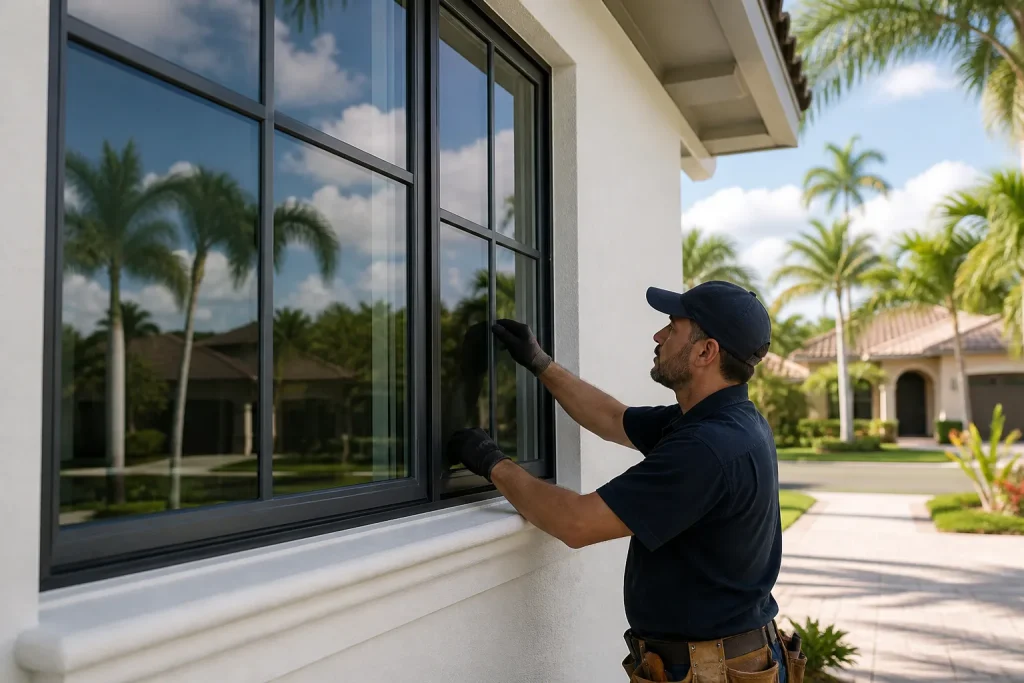
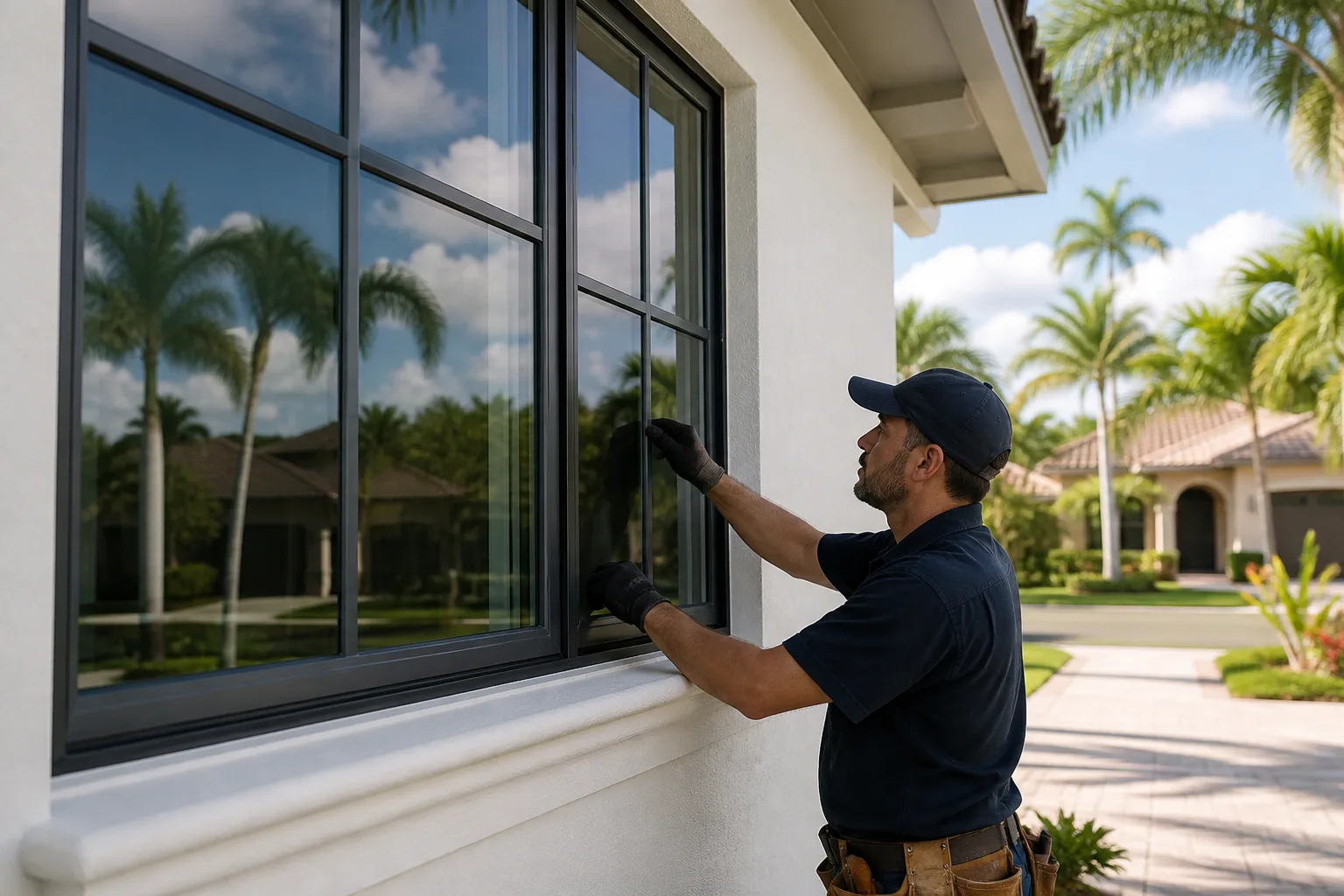
Jeld-Wen Window Installation in Miami Gardens: A Homeowner’s Guide
Jeld-Wen window installation in Miami Gardens runs $180 to $450 per opening for labor, with most full-home replacements landing between $8,000 and $22,000 depending on impact ratings, frame material, and whether the existing CBS rough opening needs remediation. What separates a 25-year install from a five-year leak is rarely the window itself. It’s the flashing, the shim pattern, and whether anyone bothered to check the rough opening with a level before the first fastener went in. If you’d rather not sort this out yourself, call TruePane Windows & Doors home at (386) 516-5343 for a free estimate.
Jeld-Wen’s warranty documentation runs 28 pages. One clause, the one about voiding coverage for “improper installation by non-authorized methods,” cancels water intrusion coverage. That’s the single most common complaint filed against window contractors in Miami-Dade County. Most homeowners never read that clause until they’re standing in a wet drywall situation and the manufacturer’s rep is pointing at page 14.
We’ve spent years untangling installations where the window was fine and everything around it was wrong. This guide walks through what Jeld-Wen actually requires in South Florida, specifically in Miami Gardens, so you can hold any installer accountable before the first screw turns.
Why Jeld-Wen’s NOA Approval Changes How Your Window Gets Installed
Jeld-Wen products sold in Miami Gardens carry a Miami-Dade County Notice of Acceptance, or NOA. That document is not a suggestion. The NOA dictates the exact installation method allowed for that specific window in this wind zone, and it splits into two paths: nail fin installation and pocket replacement. Get this wrong and both the product warranty and any labor warranty you thought you had are gone.
Here’s what the NOA means in practical terms for a Miami Gardens homeowner:
- Nail fin installation is required for new construction or full tear-out projects. The window gets mechanically fastened through the exterior fin into the block or buck frame, then flashed to the water-resistive barrier. In a CBS home, which is what most Miami Gardens houses built after 1990 have, there’s no wood sheathing to nail into. The installer is anchoring into concrete or a pressure-treated buck, and that anchoring is where Jeld-Wen’s NOA drawings get specific about fastener spacing and embedment.
- Pocket replacement slides a new window into the existing frame. It’s less invasive and costs less, but Jeld-Wen’s NOA for pocket installation assumes the original frame is square, rot-free, and properly anchored to the structure. We see original aluminum frames in Miami Gardens that have been weathering salt air since the Reagan administration. Some are fine. Some are not.
- A third option, direct-mount or masonry installation, applies to block openings with no wood buck. This method requires specific anchors and a two-stage sealant joint, and the NOA spells out the exact bead width and backer rod depth.
Ask your installer which NOA method they’re using and why. If they can’t answer, keep looking. If they say “we always do it the same way,” that’s an even worse sign, because Jeld-Wen publishes different approved methods for different frame materials and wind zones.
Rough Opening Tolerances: The Numbers Most Crews Skip
Jeld-Wen publishes a rough opening tolerance of ±1/8 inch for height and width, and the opening must be square within 1/8 inch measured diagonally. Those numbers sound fussy. They exist because the window’s frame is designed to flex in a hurricane but not to compensate for an opening that’s out of square, out of level, or both.
South Florida’s CBS construction creates a problem wood-frame builders up north rarely deal with. Concrete block openings are rarely perfect because block masons work to ±1/4 inch or worse, and twenty years of thermal movement makes it worse. When an opening is out of tolerance, a lazy crew shims the window hard in the low corner to force it square. That’s how you get a frame that binds, a sash that won’t close in August, and a seal that fails within three seasons.
What the spec actually requires:
- Measure the rough opening at top, middle, and bottom for width, and left, center, and right for height.
- Check both diagonals. If they differ by more than 1/8 inch, the opening needs correction before the window goes in.
- Shim at the approved bearing points only, never mid-span, and never at the corners to force the frame square. Shim pressure should support the frame, not distort it.
- In CBS walls, the anchoring points must land in solid block, not mortar joints, and the NOA specifies the minimum embedment depth for each fastener type.
We pulled a Jeld-Wen picture window out of a house near Buccaneer Park in Miami Gardens last year where the original installer had driven four Tapcons through the frame into mortar joints and called it anchored. The window had shifted enough in two years that the weep holes were draining into the wall cavity instead of out the sill pan. The homeowner found it because the baseboard on the interior wall had started to swell.
Flashing: The Difference Between an Install and a Leak
In Miami Gardens, rain comes sideways. The combination of afternoon thunderstorms and hurricane bands means water doesn’t politely drip down the glass. It’s driven against the wall surface under pressure. Jeld-Wen’s installation manuals specify a four-layer flashing sequence at the head, jambs, and sill, and the sequence order matters for every layer.
The standard method, called the “shingled” or “weather-lapped” approach:
- Step 1: A flexible sill pan flashing at the base of the rough opening, lapped up the jambs. This catches any water that gets past the window and directs it outward, not into the wall.
- Step 2: Jamb flashing strips applied over the side flanges, extending past the top and bottom of the opening.
- Step 3: The window itself is set, shimmed, and anchored.
- Step 4: Head flashing goes on last, lapping over the top flange and the upper edges of the jamb flashing. Anything that runs down the wall gets kicked over the flanges and out, not behind them.
What we see in Miami Gardens, too often, is a single fat bead of sealant across the top flange and a prayer. Sealant is the backup, not the primary water barrier. When sealant is the only defense, it fails at the corners first because that’s where the thermal stress concentrates, and Miami’s heat cycles stress everything.
Ask any installer you’re considering: “Walk me through your flashing sequence, specifically the sill pan.” If they look confused, that’s your answer.
Standard vs. Impact-Rated Jeld-Wen Lines in Miami Gardens
Jeld-Wen makes several product lines, and they are not interchangeable in Miami Gardens. The city sits within the High-Velocity Hurricane Zone, which means any window replacement must meet Miami-Dade impact standards unless you’re installing a shutter-protected opening with an approved protection system.
Here’s the practical breakdown:
- Jeld-Wen Premium Vinyl (impact-rated): The workhorse line for Miami Gardens replacement work. Carries a Miami-Dade NOA, meets large and small missile impact testing, and the vinyl frame does well in the salt air. Expect to pay $700 to $1,100 per opening installed.
- Jeld-Wen Siteline Wood/Clad-Wood: Wait, no. Jeld-Wen’s wood lines are beautiful, but a wood window in a Miami Gardens humidity environment is a maintenance commitment. We steer most homeowners away from wood frames in this climate unless it’s a preservation requirement. If you’re set on wood, it’s the premium line with a real finish maintenance schedule, and it carries the impact NOA at a higher price point, typically $1,400 to $2,200 per opening.
- Milgard and Marvin both make comparable impact lines for the Miami-Dade market, and as an authorized installer for both, we’ll walk you through the price and feature differences side by side so you see exactly what you’re buying. Some homeowners prefer Milgard’s fiberglass frames for their thermal performance. Others want Marvin’s aluminum-clad look. The right answer depends on your elevation, your exposure, and your budget.
Here’s a quick pricing table for a standard 36×60 inch single-hung opening in Miami Gardens to keep the comparison honest:
| Product Line | Frame Material | Impact Rated | Installed Price Range |
|---|---|---|---|
| Jeld-Wen Premium Vinyl | Vinyl | Yes | $700-$1,100 |
| Jeld-Wen Siteline Wood | Wood/Clad | Yes | $1,400-$2,200 |
| Milgard Ultra | Fiberglass | Yes | $1,100-$1,800 |
| Marvin Signature | Aluminum-clad wood | Yes | $1,500-$2,400 |
These are ballpark ranges for Miami Gardens labor and materials. Your exact number depends on opening size, second-story access, and whether the existing frame gets reused or torn out.
How to Verify Your Installer Actually Registered the Warranty
This is the question nobody asks, and it’s the one that matters most when something goes wrong. Jeld-Wen’s warranty is only as good as the registration. The dealer is supposed to register the product warranty in your name at the time of installation. If they don’t, the manufacturer has no record your windows exist and the claim process turns into a documentation scavenger hunt.
Here’s how to verify, step by step:
- Before the job starts: Ask for the installer’s current dealer authorization number. Jeld-Wen issues these to authorized dealers and they’re verifiable with a quick call to Jeld-Wen’s dealer support line. If they can’t produce it, they’re buying from a third-party distributor and may not be authorized to register the warranty at all.
- At the time of install: The warranty registration should be completed before the crew leaves. Ask to see the confirmation. At TruePane, we register both warranty layers, the manufacturer’s product warranty and our 90-Day Done Right Promise on workmanship, in writing before the truck rolls out of the driveway. That’s the Keystone Standard.
- After the job: The manufacturer should mail you a warranty certificate within 30 days. No certificate means the registration wasn’t done, and you should follow up immediately.
The labor warranty is a separate matter. Jeld-Wen’s factory warranty covers the product. The installation labor is covered by the installer’s own workmanship guarantee. If the installer offers a 30-day guarantee, they’re telling you they expect problems after 31 days. Our workmanship is guaranteed for 90 days with no paperwork fights and no arguing, because if the pane is not true, the job is not done. And we’ve been doing this in Miami Gardens since 2008, so we’ve got plenty of installations that outlasted their first two warranty periods without a single callback.
Three Questions to Ask Any Installer Before You Sign
Print these or put them in your phone. Ask every installer the same three questions. The answers will tell you more than the estimate will.
- “Show me your current Jeld-Wen dealer authorization.” Not a bundle of brochures. Not a “we’re approved” line. The actual authorization. An authorized installer gets updated NOA drawings and installation bulletins. A non-authorized crew is working from whatever they found on YouTube. If it’s wrong, the warranty is void and you’re paying twice.
- “What’s your flashing method for a CBS opening?” The answer should include the words sill pan, jamb flashing, and head flashing in sequence. If they describe caulking the top edge and moving on, that’s a no. In a Miami Gardens block house, water that gets behind the flange has nowhere to go except into your wall cavity, and it will find its way to a drywall ceiling eventually.
- “How do you handle the Miami-Dade permit and inspection process?” Window replacement in Miami Gardens requires a building permit, and the work must pass a county inspection. A legitimate installer pulls the permit, schedules the inspection, and walks it through to closure. If the installer suggests skipping the permit, run the other direction.
When to call a pro: If your existing windows are original to a home built before 2000, the rough openings are probably out of tolerance and the original frames may be corroded or rotted through in places you can’t see until they’re pulled. This is not a weekend project for a homeowner with a caulk gun and a level from the hardware store. The flashing details, the anchor placement, and the NOA compliance all affect whether your insurance claim gets paid after the next named storm. A trained professional who does this every day is the difference between a window replacement that waits for the next hurricane to fail and one that’s still dry in twenty years.
Related services in Miami Gardens: Window Installation in Miami Gardens | Window Replacement in Miami Gardens | Door Installation in Miami Gardens
Key Takeaways for Miami Gardens Homeowners
- Jeld-Wen’s NOA dictates the installation method, not installer preference. Nail fin, pocket, or masonry mount depends on the opening, and getting it wrong voids the warranty.
- Rough openings in CBS homes are often out of tolerance. Forcing a window square with shims creates a leak path and a binding sash within months.
- Flashing is a four-layer system with a specific sequence. A caulk bead is not a flashing detail, especially in Miami Gardens where wind-driven rain is the norm.
- Verify dealer authorization and warranty registration at point of installation, not when you’re filing a claim.
- Impact-rated Jeld-Wen, Milgard, Marvin, and Simonton lines are all available in Miami Gardens. Which one’s right depends on your exposure, elevation, and what the NOA says about your opening.
The Bottom Line
A Jeld-Wen window is a good product. A Jeld-Wen window installed wrong is an expensive hole in your wall wearing a good product’s name. The Miami-Dade NOA exists for a reason, and the reason is wind-driven rain and hurricane debris. If the flashing is right, the anchor points are solid, and the warranty’s registered, you’ve got a window that will still be there in thirty years. If any of those three are wrong, you’ve got a clock ticking.
If you’re in Miami Gardens and want someone to walk you through the options, TruePane Windows & Doors offers free estimates with side-by-side quotes on paper so you see exactly what you’re buying. Call (386) 516-5343 and a live person will answer. No voicemail tree, no callback form, just a straight answer. We’ve been doing this for over 42 years through the heritage Dale Kessler started, and we plan to be here in thirty more.
Frequently Asked Questions
Jeld-Wen window installation in Miami Gardens typically costs $180 to $450 per opening for labor, with full-home impact-rated replacements running $8,000 to $22,000 depending on size, frame material, and opening count. The final number depends on whether you need pocket replacement or full tear-out. Call (386) 516-5343 for an exact quote, and the estimate is free.
Yes. Jeld-Wen’s Premium Vinyl and Siteline wood lines both carry Miami-Dade NOA approvals for the High-Velocity Hurricane Zone, which includes Miami Gardens. Impact-rated windows are required for replacement work here unless the opening has an approved shutter system. Ask to see the NOA number for the specific product before you sign.
No. Jeld-Wen’s warranty is voided by “improper installation by non-authorized methods.” That means the installer has to be a currently authorized dealer using the installation method specified in the Miami-Dade NOA, and the warranty must be registered in your name at installation. We register both warranty layers in writing before the crew leaves your driveway in Miami Gardens.
Most single-opening replacements are completed in a single day, including cleanup. A full-home replacement of 10 to 15 windows usually takes three to five working days depending on the amount of rough opening remediation required and whether a county inspection slot is immediately available. The permit inspection can add a day or two. Call (386) 516-5343 to get a realistic timeline for your specific Miami Gardens home.
Written by Dale Kessler, Owner at TruePane Windows & Doors, serving Miami Gardens since 2008.
Need Windows & Doors Help?
Call TruePane Windows & Doors - licensed & insured, here with fast after-hours help in Miami Gardens.
(386) 516-5343